
Young people working together with the adults; that's when the magic happens!
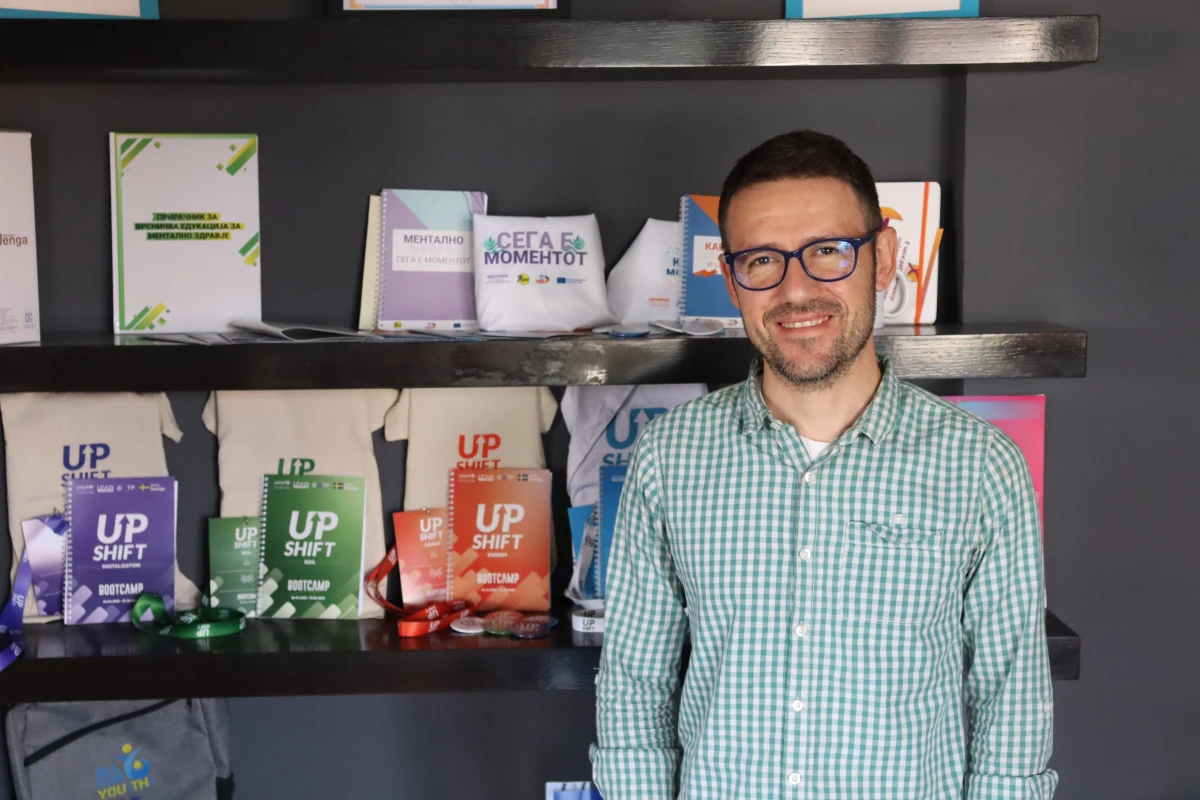
Published: Jan 27, 2026 Reading time: 6 minutes Share: Share an articleLEAD is a small non-governmental organisation established in 2016 and based in Skopje, the capital of North Macedonia. With a team of seven people, LEAD has embarked on an important mission – to strengthen civil society and the capacities of young people to cooperate with adults to contribute to a better society. We are happy to collaborate with LEAD on our project in North Macedonia, and we had a chance to speak with Ivan Jovanov, one of the founders and current executive director of the organisation.
We work with LEAD and other non-governmental organisations in North Macedonia to promote a green agenda, environmental protection, climate change, and a circular economy among young people. The European Commission supports the project.
Why did you decide to establish LEAD?
I had been in this sector for 15 years, and before establishing LEAD, I had been the president of one of the youth organisations in the country. When my mandate ended, I was thinking about what to do. I loved what I did – working with young people, supporting their personal development, and contributing to society. We had a lot of discussions with one of my colleagues back then, and the idea of LEAD was born. Then we gathered a core group of 10 people willing to work for the idea – and LEAD started.
You work primarily with young people but also engage other groups and institutions. How does this cooperation work?
Besides young people, we work with schools, teachers, and youth workers. It is not enough to work only with one group. But the magic happens when you work with all of the groups together and when they cooperate. For instance, when young people aim to do something on their own, they are often isolated and have limited resources. But bigger things can happen when adults join with their experience, knowledge, and connections. And this is also the main idea behind our organisation – to enable young people to cooperate with adults to do some good things in society.
Do you face a generation gap, hesitation, or negative attitudes from adults regarding cooperation with young people?
There is always a generation gap. When people are grown up, they forget how they felt when they were young. And this is where the main problem comes in –young people can be successful only when adults allow it. That is the issue we have to face the most. For example, we support youth participation in secondary education through high school councils where young people can participate in decision-making. That is where adults resist. They do not think that young people are capable of making decisions and contributing. They perceive young people only as children.

We wanted adults to listen to young people
What do you think can enhance the cooperation between adults and young people?
From our experience, it is always better to start on a smaller scale when we introduce something new. If we are going to say that now we are going to decide the fate of schools together with children, adults will be against it, saying that children are not capable. But we suggested that young people just provide an opinion as a consulting body. We just wanted adults to listen to them. This is where the process of communication starts. Then, after both groups talk, their efforts can grow into something bigger.
Your work includes many activities, from creating educational programmes and personal youth development to institutional strengthening of organisations. Is there an achievement you are the proudest of?
I am generally proud of how our projects and activities grow and advance. For us, it is not only important to complete the project. We want to improve it and let it snowball so that it is sustainable in the future after the project's scheduled end. And this progress is our driving force. As my colleagues, we are on the same page on this and always want to improve.
Could you mention an example of one of your projects which is still alive even after its official end?
One example that is still improving is our high school participation award. It is a national award, and we select the best high school council throughout the year. We focus on how the council functions and how it influences the school. We also raise the capacity of these councils to talk to school authorities. I would say that this is our most grown baby, now a kid already walking.
What does the process of choosing the best high school council look like?
We start on the 1st of September, and we advocate for schools to choose their representatives democratically during the month. At first, they choose the president of the class. Then, the president chooses their own body. After that, we make a list of all presidents. We meet with them, provide training, and strengthen their capacities to be better school presidents. In February, the school councils apply, and in March, we select six finalists. In April, they attend a three-day event, and after that, we choose the best one.

Young people mainly lack soft and social skills
You work with young people, teachers, and school institutions. What would you say are the most significant gaps in education in North Macedonia?
We don't provide quality education to our young people in North Macedonia. It is too theoretical. We do not focus on practical things. The poor education quality is also shown in the results of the PISA tests (international student assessment test in mathematics, science, and reading). Our students did not do very well in these tests. When young people go through this system, they are not aware of society's problems and are not active. That's why we try to change the situation and empower young people.
Which skills do you think young people lack the most?
Social and soft skills. They don't know how to think critically, work in a team, or communicate properly. These skills are very important and are needed both in their private lives and future jobs. But these skills are not taught anywhere - in school, at home, or at university. As we've had the elections recently, I've also noticed that young people are not politically informed. Before they vote, they do not read political programmes or know the political system.
We work together to engage young people in the circular economy and enhance their knowledge concerning environmental issues within the education system. Would you say that the schools in North Macedonia still have gaps when it comes to teaching about the protection of the environment?
As far as I know, students don't learn much about the environment and its protection in high school, even though I see that interest in the environment is growing among young people. I think they are more informed, but I would not say they are more aware. Schools need to teach this topic in an interdisciplinary manner, not only as a single subject. It needs to get into the whole system so that students can understand the importance of this topic on a broader scale.
The project "Civil Society and Youth for Inclusive and Sustainable Development through Circular Economy in North Macedonia" is funded by the European Union. The project leader is People in Need (PIN), with members of consortium ARNO, LEAD, and Ekovita.
This publication was funded by the European Union. Its contents are the sole responsibility of PIN and do not necessarily reflect the views of the European Union.


