
Sustainable style: Youth against textile waste in North Macedonia
Published: Mar 3, 2026 Reading time: 4 minutes Share: Share an articleVesna, a teacher from North Macedonia, has dedicated her life to fashion. But instead of perusing boutiques and malls, she sits at a sewing machine turning textile waste and old clothing into sustainable, unique designs.
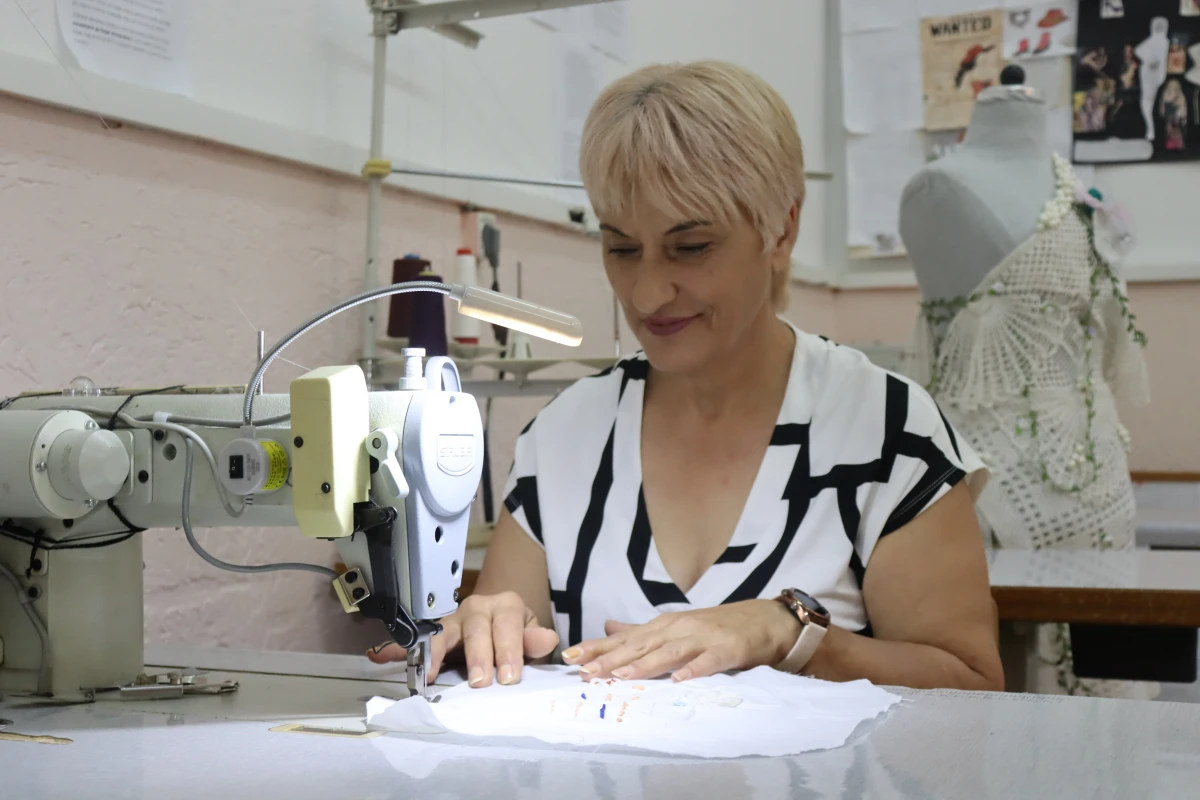
Vesna participated in our training on creating businesses within the circular economy and now she shares her newly acquired knowledge also with her students. She teaches them about sustainable fashion with great passion and energy.
The classroom where we met with Vesna resembles a creative workshop. Each desk is equipped with a sewing machine, on the table in the middle of the room are various fabrics and pictures with dresses adorn the walls. This is where Vesna has been teaching for more than 17 years.
Local schools and organisations bringing their own initiative
She has been interested in creating clothes for her whole life.

As North Macedonia works to tackle waste management, we support local schools and organisations in their circular economy initiatives.
Vesna attended a course that we ran. She learned valuable information regarding circular economy and every step in developing a business plan. She is eager to share this knowledge with her students.
Textile waste finds a new life
Vesna is trying to make her lessons practical, interesting, and interactive, by involving students in searching for various materials they can reuse and redesign.

Students are encouraged to use their creativity and produce various accessories, clothes, and textile products. They can also sell their crafts on the local market and Vesna proudly shares that they won the award for the best market stand.
Vesna shares how the students perceive the topics of circular economy and sustainability:
Teaching sustainable fashion to future fashion designers
The classes Vesna teaches include both boys and girls. Some of the students apply clear visions of becoming successful designers, others are just interested in the topic.

By teaching circular economy and sustainability in the clothing industry and reusing textile waste, Vesna is raising awareness and reducing waste in her country. And what is her advice to everyone, regarding being sustainable in fashion?
The project "Civil Society and Youth for Inclusive and Sustainable Development through Circular Economy in North Macedonia" is funded by the European Union. The project is led by People in Need (PIN), within a consortium with ARNO, LEAD, and Ekovita.
‘This publication was funded by the European Union. Its contents are the sole responsibility of People in Need and do not necessarily reflect the views of the European Union.’


